
 C
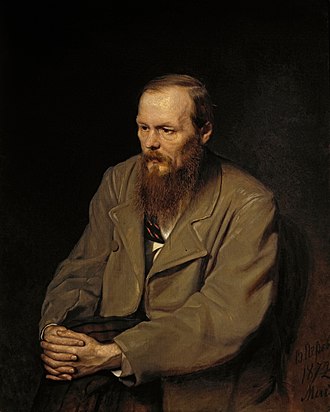
CFyodor Dostoevsky
Fyodor Dostoevsky was a Russian novelist whose profound psychological and philosophical explorations of the human condition, written against the backdrop of 19th-century Russian society, secured his place as a literary titan. His life was marked by dramatic personal suffering, including a traumatic mock execution and years of exile in Siberia, which deeply informed his epic narratives of guilt, redemption, and faith.
WikipediaChart Overview
Designed to initiate change through direct engagement. The body is built to act and the mind to strategize — a natural force for transformation.
As a Catalyst with an Active Body and Mind, Dostoevsky was driven to actively engage with and disrupt his environment to provoke change. His writing was not passive observation; it was a deliberate, often shocking intervention into the consciousness of his readers, designed to agitate, unsettle, and ultimately catalyze spiritual awakening.
About
The Man Who Felt Everything
Fyodor Dostoevsky wrote about the soul’s deepest fractures—murder, faithlessness, redemption—as if he were dissecting his own. He inhabited his characters’ torments so completely that his personal suffering—epileptic seizures, the mock execution and Siberian exile (Gate 36 — Emotional Inexperience)—became the raw material for universal truth. His entire body of work was an act of witnessing (Gate 33 — The Witness), reflecting back the spiritual sickness of his age with terrifying clarity.
The Mirror of St. Petersburg
He absorbed the city’s contradictions: aristocratic salons and debtor’s prisons, intellectual fervor and peasant piety. Walking its streets, he was a pure receptor, his open centers drinking in the anxieties and moral crises of a society in upheaval. This made him a master of psychological detail, but it also left him physically ravaged—pale, gaunt, with the nervous exhaustion of a man forever buffeted by the environment he mirrored.
The Wait That Forged a Masterpiece
Condemned to death and reprieved at the last moment, then sentenced to four years in a Siberian labor camp, his life was a series of brutal cycles. The exile was a forced lunar cycle, a 28-day strategy stretched into years of reflection. He emerged not with easy answers, but with the layered, patient understanding (Gate 5 — Natural Timing) that would define his mature novels. “Crime and Punishment” wasn’t written quickly; it simmered with the complexity of a decision given time.
The Problem-Solver Projected Upon
Readers and critics looked to him to solve the great Russian dilemma: the clash between Western ideas and the Slavic soul. He was projected upon as a spiritual guide (Profile 5/2), a role that demanded he retreat to his writing desk to recharge. His public readings were events where he was “called out,” his words carrying a prophetic weight he may not have claimed for himself.
Energy Centers
His completely open Ajna meant he absorbed the intellectual certainties and ideological pressures of his time. He could articulate the fervent convictions of nihilists, socialists, and devout Christians with equal force, never settling into a fixed mental position himself, which made his fiction a devastating arena of clashing ideas.
This open center had him absorbing and reflecting the willpower and promises of those around him, leading to cycles of intense creative output followed by collapse. His frantic writing to pay off gambling debts and support his family showcased the unsustainable commitments of an open Ego trying to prove worth through sheer output.
With no fixed identity center, his sense of self and direction was exquisitely sensitive to his environment. He could be the radical in Petrashevsky Circle, the penitent in Siberia, the Slavophile journalist, and the celebrated novelist—each a reflection of the people and places that surrounded him at the time.
The open Head center meant the inspirations and existential questions tormenting Russian intelligentsia lodged in his mind as his own. He lay awake grappling with problems of God, free will, and suffering that were not merely personal, but the absorbed anxieties of a nation in transition.
He internalized the pervasive stress and urgency of a society in upheaval, which manifested as the frantic pace of his plots, his characters' desperate races against time, and the physical urgency of his own financial and deadline pressures.
Dostoevsky absorbed the relentless work energy of a burgeoning literary marketplace, driving himself to produce serialized novels at a punishing pace. This unsustainable rhythm led to the physical crashes, nervous prostration, and exhaustion that plagued his life.
This open emotional center amplified the collective emotional climate of St. Petersburg—its angst, its euphoria, its despair. He didn't just feel his own emotions; he channeled the amplified emotional weather of his characters and his readers, walking a constant line between prophetic insight and personal overwhelm.
An open Spleen had him absorbing society's instinctual fears about survival and morality, which he then crystallized into timeless narratives about risk and consequence. It also manifested in a bodily clinging to life and relationships despite chronic illness and threat.
His open Throat absorbed the era's need to speak and be heard. He communicated with manic intensity when the pressure to express the reflected ideas became too great, yet he could also fall into periods of silent observation, knowing the power of what was left unsaid.
Incarnation Cross
His Left Angle Cross of Alignment (28/27 | 33/19) played out as his life's work of navigating the struggle for meaning. He demonstrated the perilous journey from the old world of blind faith to a new, harder-won personal alignment, modeling this tortuous transition for his readers through narratives like Raskolnikov's path to confession or Alyosha's crisis of faith.
Profile
The 5/2 Problem Solver/Natural profile defined his public arc. He was universally projected upon as the man who could solve Russia's spiritual dilemma (conscious 5th line), a mantle he wore through his authoritative novels. His necessary retreats to write, often amid poor health and financial distress, were the signature of the unconscious 2nd line—the natural needing solitude to recharge his gift before being called out again.
More Reflectors


Image from Wikipedia