
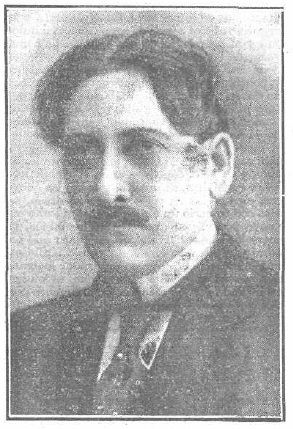
 AA
AARufino Blanco Fombona
Rufino Blanco Fombona was a Venezuelan writer, diplomat, and political figure whose career spanned the late 19th and early 20th centuries. A staunch critic of ruling regimes, his activism led to imprisonment and a life of significant exile. He died in Buenos Aires in 1944.
WikipediaChart Overview
Designed to see what others miss. The body receives sensory data while the mind actively processes patterns — a natural source of insight and foresight.
As an Oracle, his body-mind was oriented toward receptivity. He didn't actively force change; he absorbed the truths of his environment and allowed insights to surface. His writings and political stance emerged from this deep, bodily receptivity to the patterns of power and human experience around him, which he then translated.
About
The Voice in the Network
Rufino Blanco Fombona moved through the world as a man who knew exactly what to say and when to say it (Gate 12 — Careful Expression). His political writings and diplomatic postings weren't the work of a frantic activist, but of a precise observer who waited for the right moment to speak. He understood that his influence flowed entirely through his established web of relationships (Profile 4/6), a network that could amplify his logical opinions or leave him isolated if he misstepped. His power was in his voice, but only when people were listening.
The Collector of Stories
Before he formed an opinion, he listened. People told him things—their struggles, their secrets, their national hopes—and he collected these human experiences (Gate 13 — The Listener). He would then retreat, a necessary withdrawal to process the weight of what he'd witnessed (Gate 33 — The Witness). This rhythm of engagement and retreat defined his process; he wasn't a man of constant action, but of considered testimony. He would later translate these collected stories into political critique and literary works, sharing the patterns he saw from his step back (Channel 13-33 — The Prodigal).
The Precise Translator
When he spoke, he named things exactly. His value as a writer and commentator was in his ability to take complex political realities and the essence of human experience and articulate them with startling clarity (Gate 62 — Precise Communication). This wasn't emotional rhetoric; it was the output of a mind wired to organize observations into a logical framework (Gate 17 — Logical Opinion). The defined Channel of Acceptance (17-62) between his Ajna and Throat meant his expressed opinions carried the weight of a fixed mental process. He wasn't guessing; he was stating a conclusion his mind had already settled.
The Man Without a Mask
He carried a stable, inner compass of identity that didn't waver with political winds or exile (Defined G Center). This self-knowing allowed him to be a consistent critic, even when it cost him. His sense of direction was internal, not borrowed. Similarly, his way of thinking and communicating was fixed (Defined Ajna and Throat Centers); he was certain in his views, which some saw as rigid opinionation and others as intellectual clarity. He didn't absorb and reflect the thinking styles of others—he had his own.
Energy Centers
His thinking process was fixed and certain. He formed logical opinions (Gate 17) and organized his observations into a coherent framework, which he then expressed with precise detail (Gate 62). This made his intellectual stance unwavering, whether in diplomatic circles or in his polemical writings.
He carried a stable, internal sense of identity and direction. This innate self-knowing allowed him to maintain his critical voice and life's path through imprisonment, exile, and shifting political landscapes without losing his core sense of self.
He had a consistent, reliable ability to express himself and manifest his ideas into published works and public statements. His voice was his primary tool for influence, activated through his logical mind (Channel 17-62) and his collected experiences (Channel 13-33).
He operated in the will-driven worlds of politics and literature, likely absorbing and over-compensating for the need to prove his worth through monumental output and unwavering commitment to his causes, which were not his sustainable design.
He absorbed the inspirational pressure and unanswered questions of his nation and era—questions of liberty, governance, and identity—feeling a mental pressure to figure them all out.
He internalized the stress and urgency of political upheaval and deadlines, feeling a constant pressure to act and respond immediately to the crises of his time.
He could match the work energy of builders and activists in bursts, driving himself to produce vast literary and political output, but this was not his consistent source of sustainable life force.
He was a barometer for the emotional climate of revolution and exile, amplifying the collective hopes, bitterness, and disappointments of his cause and expressing them through his emotional writing.
He may have clung to relationships, beliefs, and positions past their expiration date for a felt sense of safety, making the necessary releases of exile and political change physically threatening.
Incarnation Cross
His Right Angle Cross of Eden manifested as a lifelong pursuit of a personal and political 'paradise' defined through deep, often fraught, human connection. His work continually navigated the intimacy of struggle (Gate 36) and the clarity that comes from seeing patterns in human interaction (Gate 12/11), seeking meaning and fulfillment through the stories he collected and told.
Defined Channels
2 channels
| Channel | Gates |
|---|---|
| Acceptance | 17-62 |
| The Prodigal | 13-33 |
• Channel of Acceptance (17-62) — His political and literary work was characterized by logically structured opinions and precise, factual communication. • Channel of The Prodigal (13-33) — His writing served as a testament, collecting and sharing the intimate stories and struggles of the people and politics he witnessed, often from a place of exile or retreat.
Profile
As a 4/6 Networker/Living Example, his conscious 4th line drove him to build and rely upon a web of influential connections for his impact as a writer and diplomat. His unconscious 6th line orchestrated a life of three phases: early experimentation and activism, a period of observation and withdrawal (exile), and a final role as a living example whose collected testimony held authority.
Compare to Your Design
See how your chart overlaps with Rufino Blanco Fombona's
Compare to Your DesignMore Projectors




Image from Wikipedia