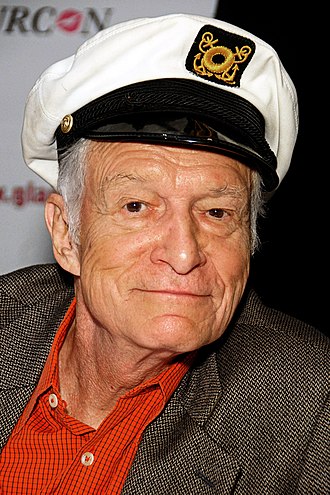
Robert Mitchum
Robert Mitchum was an American film actor whose career spanned over five decades, becoming an icon of film noir and the rugged anti-hero. He was also a published poet, composer, and singer, reflecting a multifaceted creative life that extended far beyond his screen persona.
WikipediaChart Overview
Designed to initiate change through direct engagement. The body is built to act and the mind to strategize — a natural force for transformation.
As a Catalyst, his body-mind orientation was active and initiating. He didn't wait for roles to be crafted for him; he actively shaped his persona through experimentation and direct, sometimes provocative, engagement with the world, catalyzing shifts in Hollywood's perception of male stardom.
About
The Man Who Waited to Speak
He drifted into Hollywood not with ambition, but as a refuge. A nervous breakdown from the relentless pace of a wartime factory (Open Sacral) left him temporarily blind, forcing him to stop. When the invitation to act in B-Westerns arrived, he took it—not as a calling, but as the next available door (Channel of The Alpha — 7-31). His signature languid delivery wasn’t laziness; it was a mountain-like stillness, a refusal to expend effort where it wasn’t demanded (Gate 52 — Stillness). He became famous for seeming to do nothing on screen, yet his presence commanded the frame. This was the paradox of his leadership: he led by embodying a state of being, not by performing action.
The Investigator’s Craft
Before the camera found him, he was a ghostwriter for an astrologer and a stagehand who wrote short plays. The 1/3 profile required deep immersion. He didn’t just act; he studied the mechanics of film noir, deconstructing the archetype of the doomed hero until he understood it from the inside. His experimentation was public and often messy—a 1949 marijuana arrest that should have ended his career instead became a layer of his mythic, rebellious persona. He learned through hands-on scandal and survival, each misadventure a data point that deepened his authentic, weathered authority.
The Voice That Couldn’t Be Rushed
His process infuriated directors who wanted more takes, more intensity. Mitchum would often nail a scene in one try, then resist repetition. This wasn’t unprofessionalism; it was the mechanics of a defined Throat center connected directly to his Identity (G Center). When the creative impulse (Gate 1) moved through his Identity and found expression (Gate 8), it emerged fully formed. To re-do it was to fake it. His famous baritone and economical delivery carried the weight of his entire defined circuit—when he spoke on screen, it was with the full, self-contained authority of a man who knew exactly who he was in that moment.
The Open Center Storm
His magnetic vulnerability came from the storm of open centers he navigated. He absorbed the emotional weather of every set and script (Open Solar Plexus), which allowed him to portray deep melancholy and rage without burning out himself. He felt the industry’s relentless pressure to produce (Open Root) and the public’s need for him to be a certain kind of masculine icon (Open Ego), and he reacted with a defiant, seen-it-all detachment. His infamous indifference to his own stardom was a survival mechanism—if he didn’t claim the borrowed willpower or urgency as his own, he couldn’t be broken by it.
Energy Centers
His sense of identity was fixed and magnetic. He knew who he was—a traveling man with a poetic soul—and this inner compass directed his eclectic career moves and his refusal to conform to studio expectations.
His expression was consistent and potent. Whether delivering a cynical line in a noir or singing a folk ballad, his voice carried the full weight of his defined identity, making everything he said sound like an undeniable truth.
He absorbed and reflected the certainties of the Hollywood system, often responding with a famously non-committal, 'whatever you say' attitude that subtly exposed the absurdity of fixed opinions.
He felt no innate need to prove his worth through promises or material success, which manifested as a legendary indifference to awards, contracts, and the trappings of stardom.
He was plagued by the inspirations and mental pressures of others, which he channeled into a prolific output across multiple creative fields—acting, writing, music—as if trying to answer everyone's questions at once.
He internalized the industry's stress and deadlines, leading to a paradoxical persona: a man who appeared utterly relaxed under pressure, yet whose early breakdown revealed the cost of absorbing that adrenalized pace.
He absorbed the relentless work ethic of the studio system, pushing himself to match a Generator's unsustainable output until his body famously rebelled with a stress-induced breakdown and temporary blindness.
He was a masterful portrayer of emotional depth because he amplified the emotional climate around him. This made him brilliant at conveying turmoil but vulnerable to the dramatic swings of his environment.
He had a knack for holding onto roles, habits, and relationships that were past their prime, but his wisdom was in the spontaneous, sometimes shocking releases—like his cavalier attitude toward his own career missteps.
Incarnation Cross
His Incarnation Cross of the Sphinx manifested as a career built on being both a leader (Gate 7) and a listener (Gate 13). He led the way for a new type of American actor—the anti-hero—while remaining a private observer of human nature, a collector of stories who understood people more than he sought to influence them directly.
Defined Channels
2 channels
| Channel | Gates |
|---|---|
| The Alpha | 7-31 |
| Inspiration | 1-8 |
• Channel of The Alpha (7-31) — He became a defining leader of Hollywood's noir and anti-hero era, influencing the craft through his unique, imitable presence rather than overt command. • Channel of Inspiration (1-8) — His creative self-expression, from his acting style to his songwriting and poetry, carried an authentic, individualistic signature that defined his career.
Profile
As a 1/3 Investigator/Experimenter, his conscious 1st line drove him to master the underlying mechanics of acting and genre, building a rock-solid technique. His unconscious 3rd line propelled him into a lifetime of public experiments—in film choices, in lifestyle, in scandal—through which he learned, adapted, and ultimately forged an persona that was authentically, resiliently his own.