
 AA
AAHugh Hefner
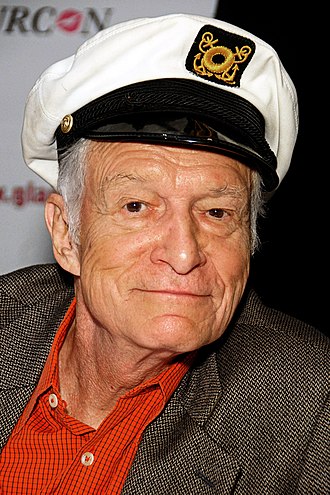
Hugh Hefner was an American entrepreneur and publisher who founded Playboy magazine in 1953 at age 27, building it into a cultural phenomenon worth over $100 million by age 40. He reinvented himself as the public face of the brand in 1960 and suffered a stroke in 1985.
WikipediaChart Overview
Designed to experience life at the deepest level. Both body and mind are tuned to receive — a natural channel for wisdom that transcends ordinary perception.
Hefner was a Mystic—an explorer of hidden truths who took his discoveries into the outer world as teaching. His entire career was mystical in structure: he entered the mansion, underwent strange initiations (constant testing of boundaries), and emerged with revelations about freedom, which he broadcast outward. His stroke in 1985 marked a withdrawal from the outer work; the mystical phase completed itself.
About
The Architect of Permission
Hugh Hefner was raised in a Midwestern Methodist home where love arrived as principle, not embrace—where anything approaching sensuality was met with silence and slight withdrawal. His mother and father taught him tolerance and idealism, but they also taught him distance. When he turned 27 and decided to start a magazine with $600 borrowed against his wedding furniture, he wasn't *escaping* his upbringing; he was *translating* it (Channel of Perfected Form, 10-57, showing the refiner's eye, the designer's precision he inherited from his father's restraint).
Playboy launched in December 1953 with a centerfold he didn't even photograph himself. It sold over 50,000 copies. By 40, he was worth more than $100 million. Yet the magazine he built was not simply about access to women—it was a philosophical manifesto wrapped in silk. Every page carried a message: *tolerance, pleasure, and the right to imagine differently* were not sins; they were freedoms. His Emotional Authority meant he could not move until the moment felt emotionally true, and 1953 was the year.
In 1960, at age 34, he reinvented himself completely. He became "Mr. Playboy"—the public face, the man in the mansion with the mansion keys. Not everyone gets to author their own mythology at that scale; his triple-split definition and deep Ajna (the Head-to-Ajna channel 4-63 of pure logical deduction) meant he *could* see the contradiction and shape it consciously. His five defined channels gave him the rare wiring to hold multiple realities at once: the Midwestern boy, the business genius, the libertarian philosopher, the seducer.
Thirty years later, in 1985, a stroke interrupted his body's pleasure sensors. But by then, Hefner had already written his life's thesis into culture itself.
Energy Centers
His defined Ajna was the command center of his whole operation. Through the Channel of Logic (4-63), he could see patterns others couldn't: that postwar Protestantism was cracking, that men wanted permission to think differently, that magazines could be *propaganda for freedom*.
Hefner's defined Ego made him driven to prove himself and claim power. His Initiation channel (25-51) meant that personal will was his launching pad—he *would* create, regardless of permission from anyone else.
His defined G gave him a clear sense of direction tied to self-love and self-acceptance. He knew who he was supposed to become: the man who would give others permission to become themselves.
Defined Head meant inspiration arrived constantly—a flood of intellectual questions and curiosities about culture, sex, politics, race. He never ran out of angles.
His defined Root center fed relentless pressure and survival drive. Both his Synthesis and Emoting channels drew from this source, keeping him in constant motion and urgency until exhaustion or illness forced a pause.
Hefner's defined SolarPlexus was his emotional compass. He could *feel* when a cultural moment was ripe. His Synthesis and Emoting channels meant emotions came in waves he could ride; he didn't try to logic his way past them.
Fixed, consistent body consciousness and spontaneous intuition.
Without defined Sacral, Hefner was not a simple yes-or-no responder. He had to *think* and *feel* through decisions. This openness may have contributed to his later health fragility—he was absorbing others' life force to fuel his constant output.
Open Throat meant Hefner had to be selective about when and how he spoke. His voice was most powerful when it carried a *message* beyond mere entertainment—which is exactly how he used it through the magazine and later through interviews and manifestos.
Incarnation Cross
His Left Angle Cross of The Clarion (51/57 | 61/62) aligned him with cultural mutation and awakening. The 51-57 gates (Shock and Clarity) meant he was fated to *disturb* the status quo, to force people to see what they'd been trained not to see. The 61-62 pairing (Inner Truth and Inner Certainty) grounded him in absolute conviction that what he was building was *right*, not merely profitable. Hefner lived this cross as a missionary who used pleasure as his scripture.
Defined Channels
5 channels
| Channel | Gates |
|---|---|
| Logic | 63-4 |
| Perfected Form | 10-57 |
| Initiation | 25-51 |
| Synthesis | 49-19 |
| Emoting | 55-39 |
• Channel of Perfected Form (10-57) — his connection from G to Spleen, the eye of the designer-refiner who understood taste, aesthetics, and what made a magazine *feel* like permission • Channel of Synthesis (19-49) — from Root to SolarPlexus, feeding constant drive and emotional urgency into his social innovations • Channel of Initiation (25-51) — from Ego to G, the willpower channel that let him borrow against his wedding furniture and *begin* what no one else dared • Channel of Emoting (39-55) — from Root to SolarPlexus, a second line into emotional truth, reinforcing his ability to sense the moment when culture was ready for his message • Channel of Logic (4-63) — from Head to Ajna, pure deductive reasoning that let him architect an entire philosophy of pleasure and see ten years ahead
Profile
The 5/1 Heretic Investigator spent sixty years investigating one core question: *What if we let people be themselves?* His unconscious Line 1 held the bedrock research—observing human desire, contradiction, and hunger beneath every taboo. His conscious Line 5 became the proof: the man living the answer in the Playboy Mansion, surrounded by the very permission he advocated. The contradiction between these lines never resolved—Hefner remained both the hermit researcher and the public embodiment of permission, never fully choosing one role over the other.
More Projectors


Image from Wikipedia