
 AA
AADick Cheney
Richard "Dick" Cheney served as the 46th Vice President of the United States from 2001 to 2009 under President George W. Bush. Earlier, he was Secretary of Defense and a U.S. Representative from Wyoming. He is married to author and former chair of the National Endowment for the Humanities, Lynne Cheney.
WikipediaChart Overview
Designed to initiate change through direct engagement. The body is built to act and the mind to strategize — a natural force for transformation.
As a Catalyst, his body-mind orientation was active, initiating change in his environment through decisive action. This showed in his drive to correct what he saw as wrong in foreign policy and domestic governance (Gate 18), and in his transformative impact on institutions like the Vice Presidency, which he expanded into a powerhouse of influence.
About
The Dealmaker in the Shadows
He didn’t work a room with backslaps; he worked it by talking about things that were real and serious. People turned to him because he remembered what worked, sensing opportunity from historical patterns with an instinctive memory (Gate 44 — Pattern Memory). His rise from Congressional intern to White House Chief of Staff before age 35 wasn’t fueled by charisma, but by a willpower to close deals and a reputation for reliable execution (Channel of Surrender — 26/44). He was the man behind the desk who knew how to get things done, his influence growing precisely because he waited to be asked.
The Principled Gatekeeper
His emotional landscape was one of strong principles about who belonged and what the tribe needed. He drew clear, final lines on who was in and who was out, whether in political alliances or policy (Gate 49 — Emotional Revolution). This was coupled with a radar for the needs—and vulnerabilities—of the systems and people around him (Gate 19 — Sensitivity to Needs). He didn’t just oppose policies; he emotionally rejected them as threats to his defined tribal order (Channel of Synthesis — 49/19). His wife noted he was “calm, deliberate,” his decisions emerging only after the emotional wave had settled (Emotional Authority).
The Mind That Never Rested
A relentless pressure to know the unknowable drove his mental process (Gate 61 — Inner Truth). His mind cycled through knowing and not-knowing, returning to review the same strategic concepts repeatedly (Gate 24 — Mental Reviewing, defined in both Personality and Design). This wasn’t indecision, but a deep reconceptualization that sought inner truth beyond logic (Channel of Awareness — 61/24). He left Yale, and later his PhD, not from failure, but perhaps from an inner pressure that conventional paths couldn’t satisfy.
The Body Under Siege
His physical life was a long negotiation with survival. Four heart attacks, bypass surgery, a pacemaker, and finally a transplant created a biography written on his cardiovascular system. Each crisis was a dark, teaching experience he was drawn into (Gate 36.1 — Emotional Inexperience). Yet, through it all, he operated with a steady, almost detached relationship to this pressure and stress (Defined Root Center). His consistent willpower (Defined Ego Center) pulsed through these health collapses, allowing him to return to duty each time, making promises to the nation his body struggled to keep for itself.
Energy Centers
His way of processing information and forming opinions was fixed and certain. He was known for his consistent, unwavering worldview on defense and conservative policy, often seen as opinionated because his mental framework did not fluctuate.
He accessed willpower in pulses, able to make and keep significant promises, like steering the Gulf War strategy or returning to duty after repeated heart surgeries. This was not a constant burn but a focused force applied to critical objectives.
He lived with a consistent source of inspirational pressure, a drive to figure things out. This manifested as the relentless strategic thinking and questioning that characterized his approach to governance and crisis management.
He had a steady relationship with stress and pressure, able to channel the adrenaline of political battles and international conflicts without being destabilized by it. This defined center supported his capacity to work in high-stakes environments.
He experienced life through emotional waves that were the source of his authority. His famous calm deliberation was the settled field from which his impactful, and often divisive, decisions eventually emerged.
He possessed a reliable survival instinct and a consistent relationship with his body's signals, which became tragically evident through his multiple health crises. His ability to act on in-the-moment instincts shaped key political and personal decisions.
He absorbed and reflected the identity and direction of the people and administrations he served. He became a definitive vessel for the Bush administration's neoconservative direction, his own sense of self deeply intertwined with his role and his network.
Without a consistent life force, he could match the grueling pace of Washington temporarily but was designed for strategic guidance, not sustained labor. His health struggles underscored a body not wired for non-stop output, necessitating his famed discipline about ending his workday.
He absorbed the need to communicate from his environment, speaking up powerfully when recognized. When not invited, his voice could struggle to land, but when he spoke as Vice President, his words carried immense, consequential weight precisely because he chose his moments.
Incarnation Cross
The Right Angle Cross of The Four Ways played out as a lifelong navigation of needs, endings, and order. His public life was dedicated to managing the nation's needs (Gate 19), learning through often-painful experiences like health failures and political controversies (Gate 33), enforcing a strict sense of order and principles (Gate 24), and remembering patterns from history to justify action (Gate 44).
Defined Channels
3 channels
| Channel | Gates |
|---|---|
| Awareness | 61-24 |
| Surrender | 26-44 |
| Synthesis | 49-19 |
• Channel of Awareness (61-24) — His career was defined by a drive to understand the inner truths of national security and power, leading to a relentless, reviewing mental process on strategic matters. • Channel of Surrender (26-44) — He was known as a master political dealmaker and a staunch defender of military systems, using an instinctive memory of what worked to secure outcomes and resources. • Channel of Synthesis (49-19) — He enforced strong emotional principles on who belonged in his political tribe and was acutely sensitive to the perceived needs of the nation's defense and energy sectors.
Profile
As a 4/6 Networker/Living Example, his conscious 4th line fueled his rise through a trusted inner circle, making his network his most critical asset. The unconscious 6th line archetype guided his three-phase life: experimentation in early political roles, a withdrawn period in the private sector, and his final emergence as a visible, controversial role model whose very survival exemplified his steadfast worldview.
More Projectors


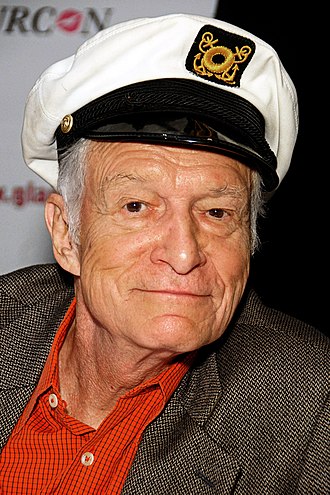


Image from Wikipedia